The GPS Has No Idea: How Alacati's Drivers Navigate by Memory, Instinct, and Something Your Phone Can't Download
Pull up Google Maps for Alacati and it'll get you somewhere close. Maybe even close enough. But ask any experienced driver here what he thinks of navigation apps and you'll get a reaction somewhere between amusement and mild offense — the way a master chef might react if you suggested they follow a recipe from a fast food chain.
The maps aren't wrong, exactly. They're just incomplete in all the ways that matter most.
What a Mental Map Actually Contains
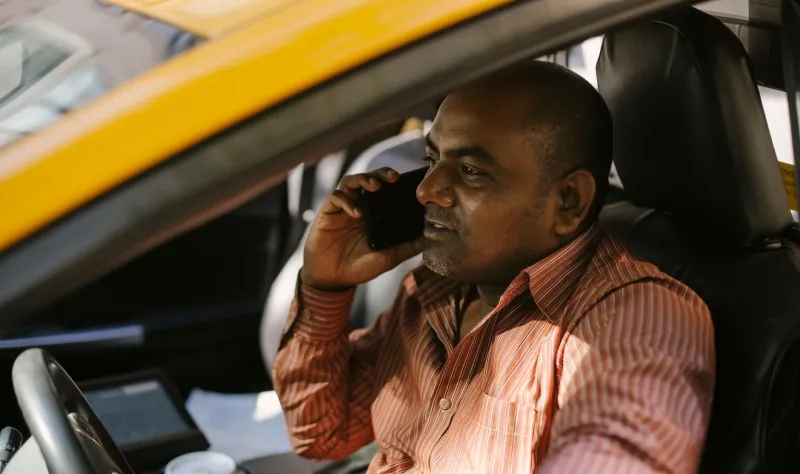
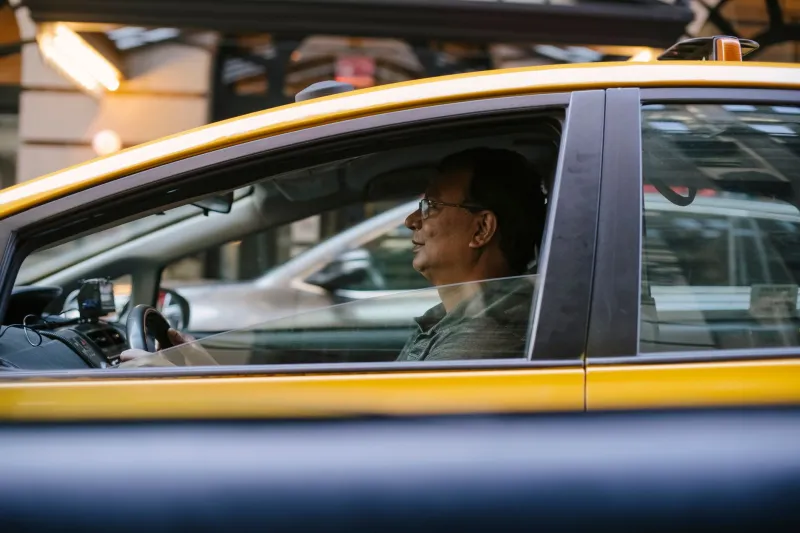
When an Alacati taxi driver navigates, he's not consulting a database. He's pulling from a living, constantly updated mental model of the town that includes things no mapping software has ever tried to capture.
He knows that the alley behind the blue-shuttered boutique floods after heavy rain and adds ten minutes to any route through the old quarter. He knows that the shortcut past the olive press is only viable before 10 a.m. because the delivery trucks block it after that. He knows that the road the app confidently recommends on summer Saturdays turns into a parking lot by noon because of the market.
This isn't trivia. It's operational intelligence, updated continuously through daily experience. The kind of knowledge that only accumulates when you've driven the same streets in every season, at every hour, for years.
The Memory Trick That Has Nothing to Do With GPS
Research on London's black cab drivers — who must pass a legendary test called "The Knowledge" before they're licensed — has shown that navigating by memory actually changes the structure of the brain. The hippocampus, the region associated with spatial memory, is measurably larger in experienced cabbies than in the general population.
Alacati's drivers haven't taken any formal test, but they've built the same kind of mental architecture through sheer repetition and attention. Ask one of them how they remember which route a regular customer prefers and they'll look at you like it's a strange question. "I just know," is the usual answer. But "just knowing" is the product of hundreds of interactions filed away carefully in a mind that was trained to pay attention.
This is what smartphone dependency is quietly eroding. When your phone tells you where to turn, you stop building the mental model that would let you navigate without it. Studies on GPS use consistently show reduced spatial memory in heavy users — we're outsourcing a cognitive function and getting worse at it the more we do so.
Regular Customers and the Art of Remembering People
Navigation is only half of it. The other half is people.
Alacati's experienced drivers maintain a mental database of regular passengers that goes well beyond names and phone numbers. They remember that the woman who runs the ceramic shop prefers the longer coastal route because she uses the ride to decompress. They remember that the retired couple from the villa on the hill always want to stop at the bakery first. They remember which foreign visitors are coming back for the second or third time and what they asked about last time.
This is hospitality as a cognitive skill. And it creates a completely different kind of service experience than anything an app can offer. When your driver already knows what you need before you ask, the ride stops feeling like a transaction and starts feeling like being looked after.
What Travelers Lose When They Stop Asking for Directions
There's a particular kind of travel experience that's almost extinct now: the conversation that happens when you ask someone how to get somewhere and they tell you more than you expected.
The old way of navigating a new place — asking locals, getting slightly wrong directions, wandering a little, asking again — was inefficient by every measurable standard. It was also how people actually discovered places. The wrong turn that led to the best meal of the trip. The shortcut through the neighborhood that turned into an hour of wandering. The driver who said "I'll take you there, but let me show you something first."
GPS optimizes for speed and eliminates exactly this kind of productive friction.
Alacati's drivers are one of the last reliable access points to this older mode of travel. When you're booking a ride through Alacati Korsan Taksi, you're not just arranging transportation — you're potentially accessing a guided interpretation of the town that no app can provide. But only if you put the phone down long enough to ask.
How to Actually Use This on Your Trip
Here's the practical version of everything above.
When your driver picks you up, tell him where you want to go — but then ask him how he'd do the day if it were up to him. Ask what the road is like right now, not what the app says it should be. Ask if there's anything worth seeing on the way. Ask what he'd skip.
You might get a one-word answer. Or you might get the most useful fifteen minutes of your entire trip. Either way, you'll arrive knowing something the map never told you.
The phone is a tool. The driver is a person who has spent years learning this place from the inside. In Alacati, that distinction is worth something. Use it.