Forget the Guidebook: Your Alacati Taxi Driver Is the Best Cultural Education You'll Ever Get
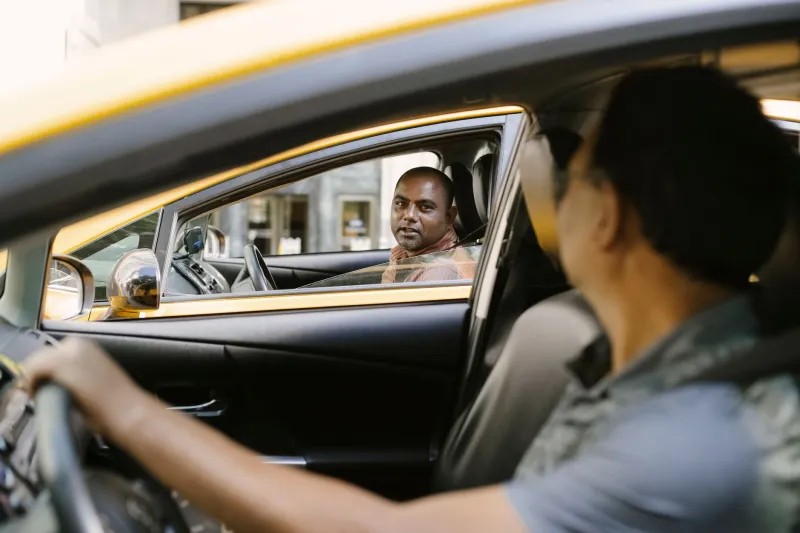
You did your homework. You read the blog posts, bookmarked the Instagram accounts, maybe even bought a paperback travel guide at the airport. And honestly? None of that prep work is wasted. But here's something seasoned travelers to Alacati figure out pretty quickly: the most valuable cultural briefing you'll get on this trip doesn't happen at a museum or a walking tour. It happens in a taxi.
We're not being cute about it. The drivers who work these cobblestone streets and coastal back roads have been watching this town breathe for years — some of them for decades. They've seen the boutique hotels arrive, the wine bars multiply, the tourist season stretch longer every summer. And they remember what was here before all of that. That kind of layered, living knowledge is genuinely impossible to Google.
The Stuff That Never Makes It Into Print
Travel writing — including the stuff on this very site — is always a simplification. You compress a complex place into a list of recommendations and hope it lands. What gets lost in that compression is everything messy, personal, and real.
Your taxi driver doesn't have that problem. When you ask about the best place to eat meze, you might get a ten-minute story about a woman named Hatice who has been making the same eggplant dish since 1987, whose daughter now runs the front of house, and whose restaurant doesn't have a sign because it's never needed one. That's not a Yelp review. That's an introduction.
Alacati's history is genuinely layered — Greek families who left during the population exchanges of the 1920s, wind that shaped the town's architecture, a windsurfing boom that transformed the economy, then a slow-food and boutique hospitality wave that followed. Drivers who grew up here lived through multiple versions of this place. They can tell you which changes they loved and which ones they're still getting used to. That kind of nuanced perspective doesn't exist in any edition of Lonely Planet.
Why Americans, Specifically, Tend to Miss This
There's a particular American travel habit that works against you here: treating the taxi as purely functional. You open the app, confirm the destination, put your AirPods in, and zone out. Back home, that's totally reasonable — you're commuting, you're tired, the driver is a stranger in a big city. The transactional framing makes sense.
But Alacati isn't a big city. It's a small, tight-knit town where the taxi driver probably knows your hotel owner personally, has strong opinions about which beach is actually worth visiting this time of year, and is genuinely curious about where you're from. The cultural exchange runs both ways. Pulling out your headphones and saying "what do you think we should do today?" opens a door that a lot of travelers never think to knock on.
Drivers here are also accustomed to foreign visitors who don't speak Turkish — they've developed a remarkable ability to communicate across language gaps, using a combination of broken English, hand gestures, phone translation apps, and sheer enthusiasm. Don't let the language barrier talk you out of a conversation.
Real Things You Might Actually Learn
To make this concrete: here's the kind of knowledge that tends to surface in these back-seat exchanges.
Festival timing. Alacati hosts events — herb festivals, art weeks, harvest celebrations — that don't always make it onto the major tourism calendars. Drivers know when the town fills up, when it quiets down, and which local events are worth rearranging your schedule for.
Family-run spots with no online presence. Some of the best food in this region is served at tables that have never been photographed for Instagram. Word of mouth is the only marketing these places do, and your driver is part of that network.
Neighborhood context. Alacati's old stone district looks picturesque from any angle, but a driver can tell you which alleys have changed the most, which buildings have stories attached to them, and which corners are worth lingering at versus which ones are purely for photos.
What to actually order. Not just the dish, but the version of the dish. "Get the lamb, but ask for it the way they make it on Sundays" is not information you will find anywhere online.
Honest crowd intel. Drivers know where the tourist groups are going and — if you ask nicely — where the locals are eating instead.
How to Make the Most of the Ride
You don't have to be a professional conversationalist to pull this off. A few simple openers tend to work well:
- "How long have you been driving in Alacati?"
- "What's your favorite thing about living here?"
- "Is there somewhere you'd take your own family to eat?"
- "What's changed the most in the last few years?"
These questions invite stories rather than yes/no answers, and they signal that you're genuinely interested rather than just making small talk. Most drivers will run with it from there.
It also helps to have your phone's translation app ready — not because you'll need it constantly, but because pulling it out shows good faith and keeps the conversation moving when vocabulary runs out.
The Bigger Point
Alacati is a destination that rewards curiosity. It's small enough that a few well-placed conversations can genuinely reshape your understanding of the place — and large enough in character that there's always more to discover.
Guidebooks will tell you what to see. A good taxi driver will tell you how to feel about what you're seeing. That's the difference between checking boxes and actually connecting with a place.
Next time you're heading somewhere in Alacati — the beach, a restaurant, the next town over — consider the ride itself part of the experience. Put the headphones away. Ask the driver something real. You might be surprised how much you learn before you even get where you're going.