The Street-Level Economic Intel Wall Street Will Never Sell You

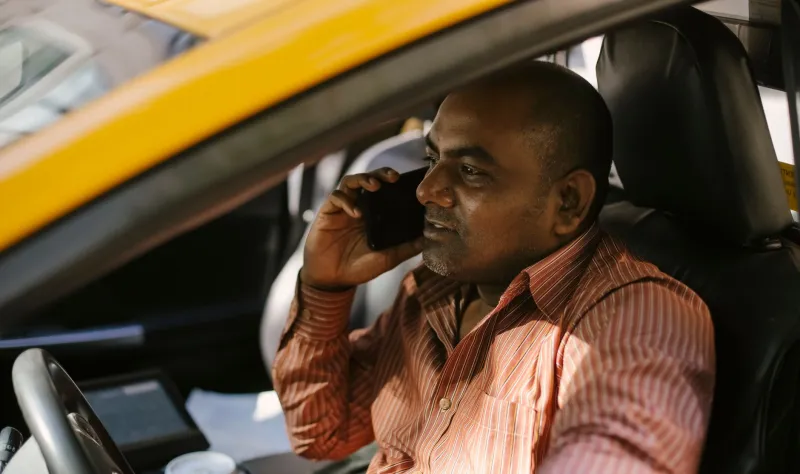
Let's be honest about something. The average American financial advisor is working off data that's already three months old by the time it hits your inbox. Quarterly reports, lagging indicators, analyst consensus estimates — it's all backward-looking by design. Meanwhile, in a sun-drenched coastal town on Turkey's Aegean coast, a taxi driver just told his third passenger of the morning exactly which direction the local economy is heading. And he's probably right.
This isn't a knock on your financial planner. It's a genuine observation about where real economic intelligence actually lives — and why more Americans should be paying attention to it.
What a Cab Ride Actually Tells You
When you book a ride through Alacati Korsan Taksi and settle into the back seat for a drive through Alacati's cobblestone lanes, you're not just getting from point A to point B. You're tapping into a living, breathing economic survey that updates in real time.
Alacati's drivers work these streets every single day. They pick up tourists from Istanbul, expats from Germany, retirees from the UK, and yes, increasingly, Americans who've discovered that this wind-swept corner of the Izmir province is one of the Mediterranean's best-kept secrets. That constant passenger flow gives local drivers something your fund manager genuinely doesn't have: granular, current, on-the-ground data about who's spending money, where they're coming from, and how freely they're opening their wallets.
One driver we spoke with — let's call him Mehmet, because that's his name and he didn't ask to be anonymous — described noticing a sharp uptick in European visitors specifically from Germany and the Netherlands starting about 18 months before Turkish tourism statistics officially confirmed the trend. He didn't need a government report. He could hear it in the accents filling his cab.
The Inflation Reality Check You Can't Get From the Fed
Here's where it gets genuinely interesting for anyone who thinks about money for a living.
Turkey has experienced some of the most dramatic currency fluctuations of any major emerging market over the past several years. The Turkish lira's volatility has been well-documented in financial media. What's less documented is how that volatility actually plays out at street level — and what it signals about consumer behavior, business resilience, and investment timing.
Alacati's taxi drivers live inside that volatility. They price their services, manage their fuel costs, and negotiate their daily reality against a currency that can shift meaningfully week to week. When a driver tells you that his regulars — the Istanbul weekenders who've been coming to Alacati for a decade — are suddenly booking shorter stays and eating at home more often instead of hitting the wine bars on Kemalpaşa Street, that's not anecdote. That's a leading indicator.
Conversely, when those same drivers start noting that international bookings are surging and that foreign visitors seem genuinely unbothered by prices that would have seemed steep two years ago, they're describing exactly the kind of currency-driven tourism boom that shows up in hospitality sector earnings about two quarters later.
Your financial planner will catch that in the next emerging markets review. Mehmet caught it in June.
Business Cycles, Seen From the Driver's Seat
Alacati has a distinct seasonal rhythm, and local drivers understand it with a precision that would impress any economist who studies resort economies. The shoulder seasons — May and October specifically — have been shifting. Stays are getting longer. The demographic mix is changing. Boutique hotel openings are accelerating in certain neighborhoods while others have quietly gone dark.
Drivers notice all of this because they're the connective tissue of the town's economy. They're hauling contractors to renovation sites in the off-season. They're picking up restaurant suppliers at odd hours. They know which new property just started construction and which one quietly stopped. They know when the airport transfers slow down before the official tourism data catches up.
For an American investor with exposure to emerging market hospitality funds, Mediterranean tourism ETFs, or even just a general curiosity about where global travel dollars are flowing next, this kind of texture is genuinely hard to replicate from a desk in Manhattan.
The Currency Conversation Nobody's Having
One of the most consistent themes in conversations with Alacati's local drivers is a sophisticated, if informal, understanding of exchange rate dynamics. These are people who regularly deal with passengers paying in euros, dollars, and lira — sometimes negotiating across all three in the same conversation. They've developed an intuitive feel for purchasing power parity that most economics graduates would struggle to articulate as cleanly.
Drivers know, for instance, that when the dollar is strong against the lira, American visitors become noticeably more generous — longer rides, more stops, less price sensitivity. They know which nationalities are currently flush and which are tightening up. They've watched the composition of Alacati's tourist economy shift in real time as currency relationships have evolved.
That's not economic theory. That's economic observation at its most raw and immediate. And it maps, often with surprising accuracy, onto the kind of currency and consumer sentiment data that institutional investors pay serious money to access.
So What Do You Actually Do With This?
We're not suggesting you fire your financial advisor and replace them with a group chat of Alacati taxi drivers. That would be chaotic, and also probably a licensing issue.
But there's a real argument for building what some investors call "mosaic theory" into how you think about emerging markets and travel-driven economies. The idea is simple: no single data source tells the whole story, but combining official statistics with ground-level intelligence gives you a more complete picture than either alone.
Next time you're in Alacati — and if you haven't been, that's a separate conversation worth having — pay attention during your rides. Ask your driver how the season's been. Ask whether the mix of visitors feels different from last year. Ask whether prices for everyday things have moved noticeably. You'll get answers that are honest, unfiltered, and often more current than anything in your investment newsletter.
And if you need a ride to get that conversation started, you know where to find us.
Getting around Alacati is easy when you know who to call. Alacati Korsan Taksi connects travelers with reliable local drivers who know these streets — and a thing or two about how this town actually works.